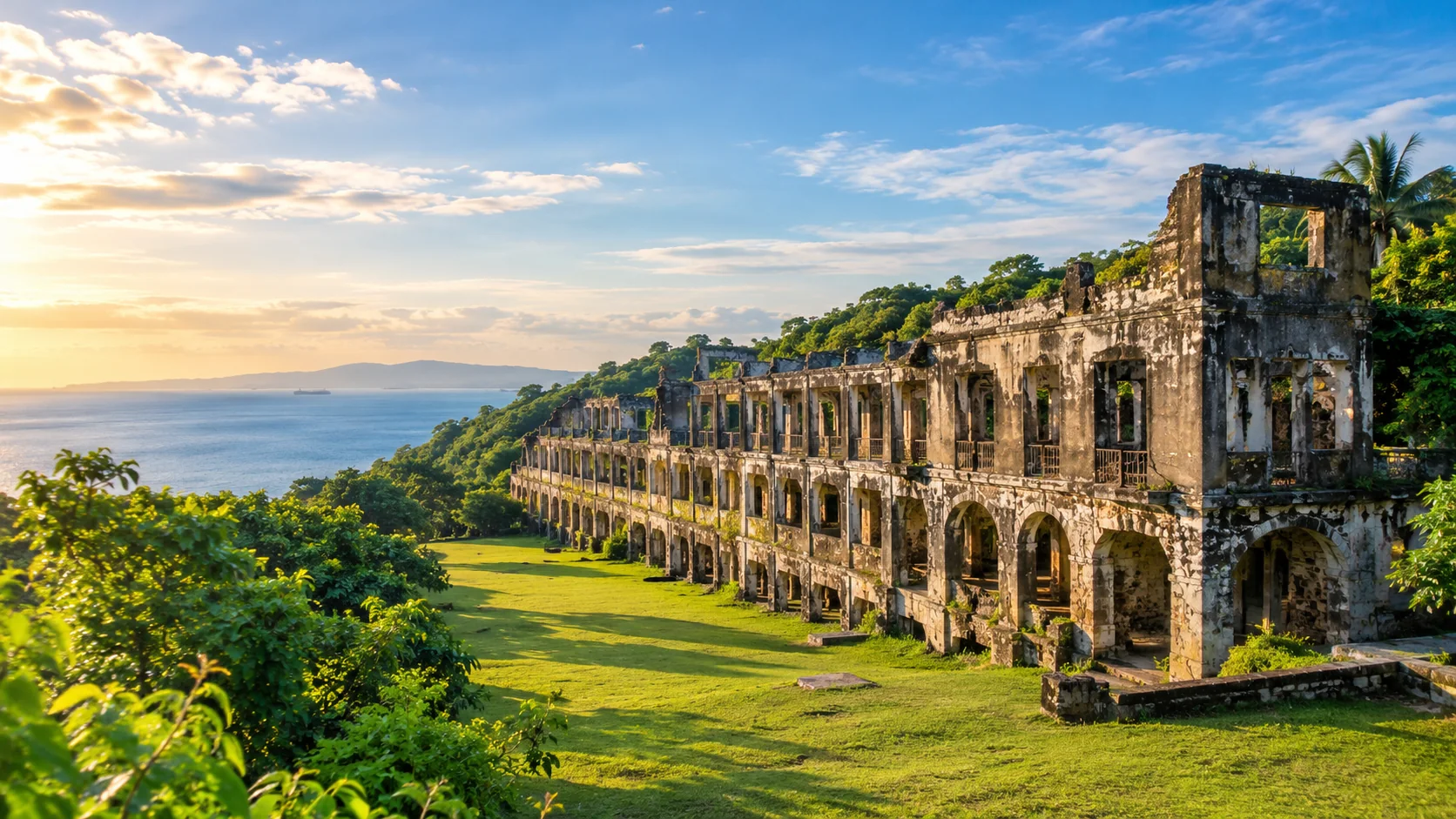
A Corregidor Island tour brings you closer to the history of Manila Bay through wartime tunnels, coastal defenses, barracks, and memorials. Known as “The Rock,” the island offers a chance to understand the people and events behind some of the Philippines’ most significant World War II sites.
This guide introduces six landmarks to ask about when planning your visit, explains why the island matters, and shares ways to get more from a guided historical tour. Confirm the actual itinerary before booking, because access to individual sites and activities may vary.
Why Corregidor Matters in Philippine History
Corregidor’s position at the entrance to Manila Bay helps explain its military importance. Looking across the water, then visiting its gun batteries and tunnels, gives you a clearer picture of how geography shaped the island’s defenses.
The island also served as a wartime seat of the Philippine Commonwealth government. President Manuel Quezon and his family sheltered in Malinta Tunnel during World War II. Japanese forces occupied Corregidor in 1942, and American forces retook it in 1945. For historical background, read the National Historical Commission of the Philippines’ Corregidor registry entry.
Understanding this background makes the visit more meaningful. A ruined building is more than a photo stop: it raises questions about daily life, military service, and the destruction experienced by those who were on the island.
6 Landmarks to Explore on a Corregidor Island Tour
Use these landmarks as a starting point when discussing your itinerary. Ask which stops are included, how much walking is involved, and whether any activities require separate admission.
1. Malinta Tunnel
Malinta Tunnel is closely associated with Corregidor’s wartime history. Ask your guide how the tunnel was used and how life underground differed from conditions outside. Confirm whether your package includes entering the tunnel or any presentation offered there; do not assume every tour includes the same experience.
2. Pacific War Memorial
The Pacific War Memorial is a place to reflect on the Filipino and American defenders remembered on the island. Give yourself time to read the inscriptions and listen to your guide. This stop adds human context to the military structures you see elsewhere.
3. Battery Hearn
Battery Hearn offers a closer look at the island’s coastal artillery. Rather than treating the gun only as a backdrop, ask how its position related to the surrounding waters and the wider defense system. Follow site instructions and avoid climbing on historic equipment.
4. Middleside Barracks
The barracks ruins invite visitors to think about the island as a place where people lived and worked. Ask your guide about their original purpose and how the site changed during the war. View the structures from permitted areas and respect any barriers around damaged sections.
5. Corregidor Lighthouse
The lighthouse provides a different subject alongside the tunnels, guns, and memorials. Ask about its history and the surrounding landscape. Check what areas are accessible during your visit instead of assuming that entry or a climb to an upper level will be available.
6. Eternal Flame of Freedom
Include time for reflection at the Eternal Flame of Freedom if it is part of your route. Memorial stops offer a chance to consider the meaning of remembrance beyond battlefield events. Keep photographs respectful and allow other visitors space to experience the site.
How to Get More from Your Guided Visit
A rewarding Corregidor Island tour connects individual landmarks into a larger story. Ask your guide to explain the order of events and point out how the tunnels, barracks, and gun batteries relate to one another.
- Ask about everyday life: How did people communicate, find shelter, and carry out their duties?
- Look for historical context: Which features are wartime remains, and which were restored or added later?
- Read the markers: Names and dates help connect a place with the people associated with it.
- Make room for reflection: Leave time to listen and observe rather than rushing between photographs.
Enjoy the Scenery and Respect the Historic Sites
Corregidor’s views across Manila Bay complement its historical landmarks. Between stops, take time to notice the landscape and think about how the island’s location influenced its role in history.
Stay on permitted paths, leave artifacts and building fragments where they are, and take your rubbish with you. Ask before photographing other visitors or tour staff. At memorials, keep noise down and follow any guidance provided by your group leader.
Plan Your Corregidor Island Tour
Before choosing a package, confirm the meeting point, departure route, transport arrangements, meals, admission fees, and planned stops. A Manila pickup and a boat departure from Manila are different arrangements, so check the complete journey rather than relying on the package name alone.
Wear comfortable footwear and bring drinking water and suitable sun or rain protection. If anyone in your group has difficulty with steps, uneven paths, or boarding a boat, discuss their needs before booking so you can understand the arrangements available.
Compare our Corregidor tour packages and contact our team to confirm the details for your preferred date.
Start Planning Your Visit
Whether your interest is military history, heritage photography, or learning more about the Philippines, Corregidor offers plenty to explore. Choose an itinerary that gives you time to understand the landmarks and appreciate the stories they preserve.